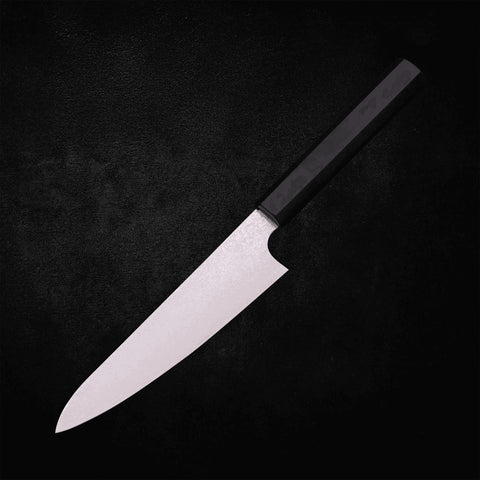
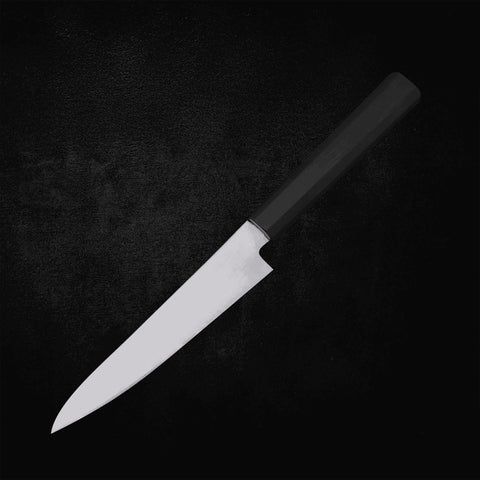
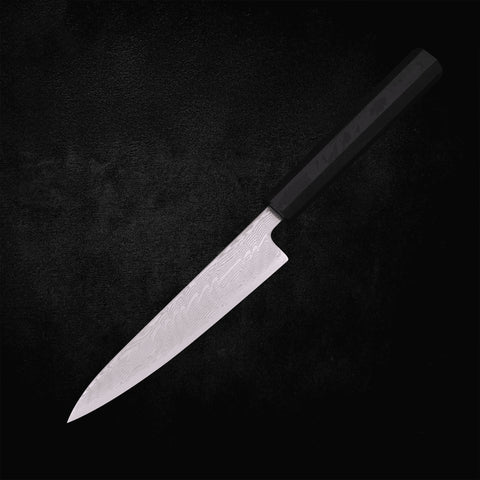
TL;DR: Sujihiki excels at slicing proteins with long, smooth cuts using its narrow 210-360mm blade. Petty knives handle precise detail work and versatile prep tasks with their shorter 100-150mm profile. Choose sujihiki for meat-heavy kitchens, petty for general versatility and tight spaces.
The wrong knife can turn simple food prep into a frustrating struggle. Many home cooks grab whatever blade is nearby, only to battle through uneven cuts, crushed vegetables, or shredded meat. Japanese sujihiki and petty knives solve different kitchen challenges with precision-engineered designs. Understanding their distinct strengths means faster prep, cleaner cuts, and more satisfying cooking experiences.
1. Pros and Cons: Sujihiki and Petty Knives
| Knife type | Advantages | Disadvantages |
|---|---|---|
| Sujihiki |
Effortless slicing of roasts, fish, and large proteins thanks to the long, thin blade Very clean cuts that preserve texture and presentation Delivers restaurant-quality portions and sashimi Efficient single drawing cuts that speed up prep |
Less versatile for vegetables, herbs, and small tasks Long blade needs plenty of cutting-board and counter space Requires proper slicing technique to shine Awkward to store without a long block or magnetic strip |
| Petty |
Highly versatile for fruits, vegetables, herbs, and small proteins Short blade gives excellent precision and maneuverability Easy and intuitive for beginners to use Compact size suits small kitchens and boards |
Short blade struggles with large vegetables, roasts, and whole fish Slower for bulk prep of big ingredients Cannot match a sujihiki for pure slicing performance on proteins |
Sujihiki shines for long, clean, efficient slices on large cuts of meat and fish, but it needs more space, care, and technique to use comfortably. A petty knife is compact, intuitive, and versatile for everyday detail work, yet it lacks reach and power on bigger ingredients, so they complement each other.
2. Design Comparison: Blade Size, Shape, and Thickness
| Feature | Sujihiki | Petty Knife |
|---|---|---|
| Blade Length | 210-300mm (8.3-12 inches) | 100-150mm (4-6 inches) |
| Blade Width | 35-45mm (narrow profile) | 27-34mm (compact width) |
| Thickness | 1.5-2.5mm (ultra-thin) | 1.5-2.2mm (moderate thickness) |
| Shape Profile | Long, straight, minimal curve | Short, versatile, slight curve |
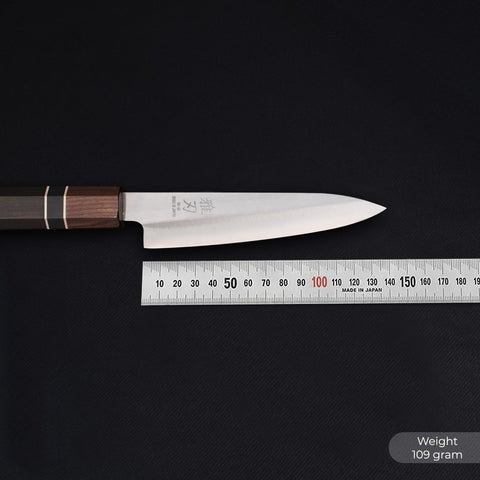
| Weight | 115-185g (lightweight feel) | 60-100g (nimble handling) |
| Primary Motion | Drawing/pulling cuts | Push cuts, rocking motion |
2.1. Blade Length and Profile
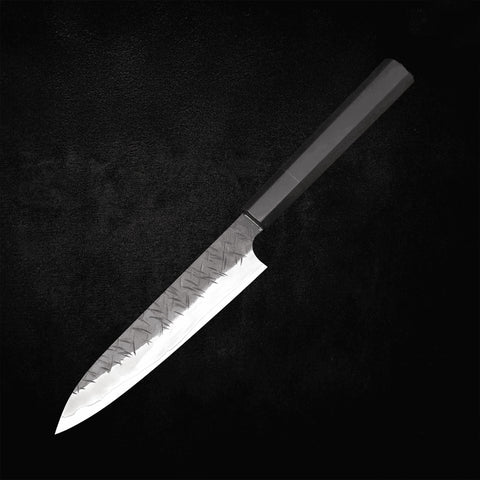
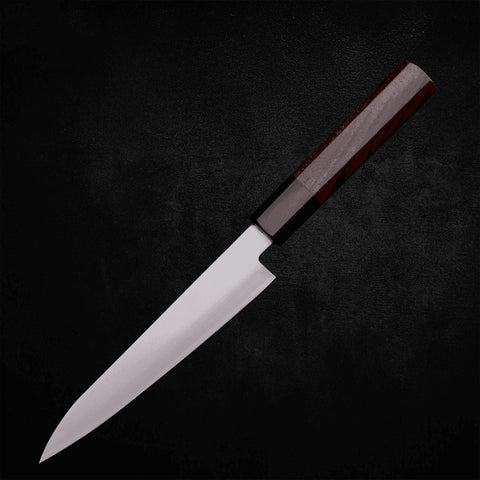
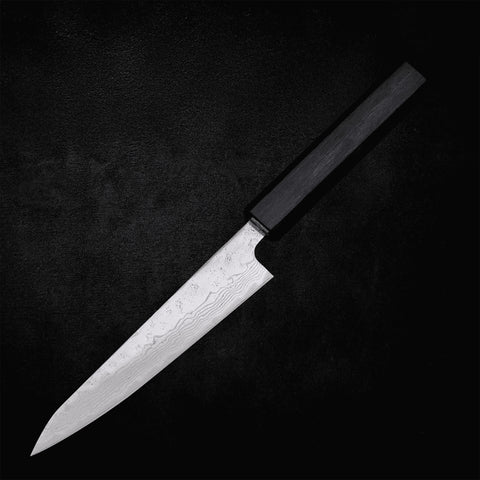
Sujihiki is a Japanese slicing knife designed for long, smooth cuts through proteins. The extended 210-360mm blade creates a slicing powerhouse that moves through proteins in single, fluid motions. Its narrow width (35-45mm) is intended to minimize food contact, which can help reduce drag and prevent ingredients from sticking.
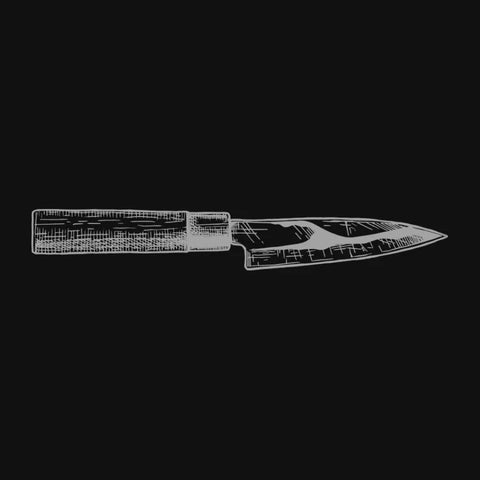
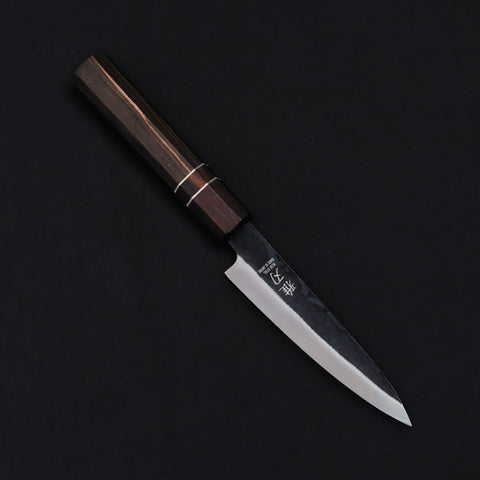
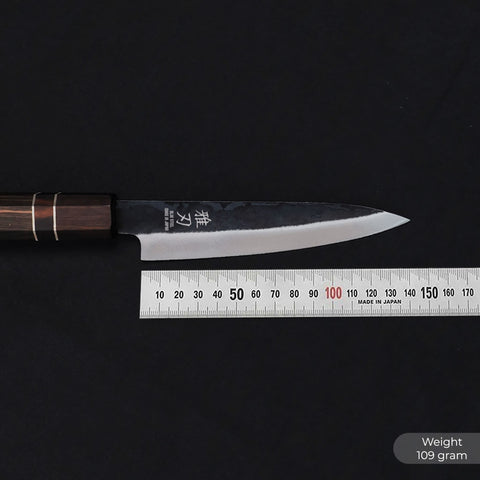
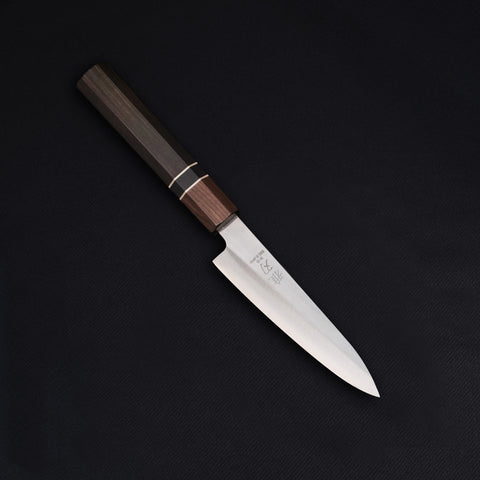
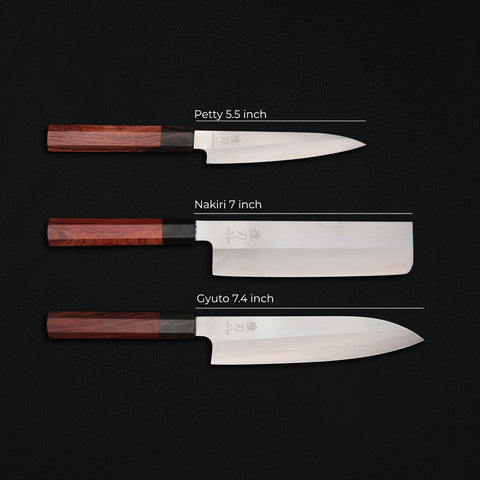
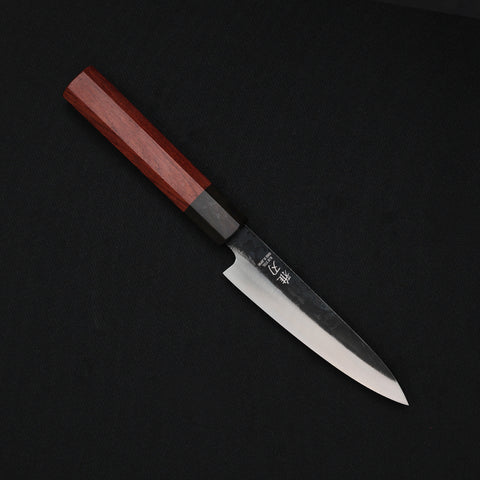
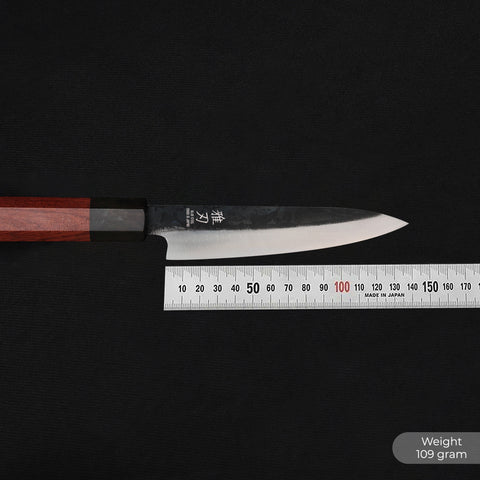
Petty knives, derived from the French "petit" meaning small, offer compact versatility. Their 120-180mm length provides excellent control for intricate tasks while maintaining enough blade surface for moderate prep work. The balanced proportions make them feel natural in most hands.
2.2. Thickness and Edge Geometry
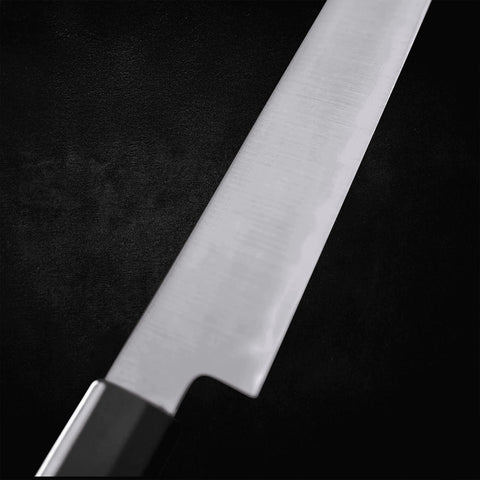
Sujihiki blades are known for their thin profiles (1.5-2.5mm), which allow for smooth slicing through delicate fish, cooked meats, and vegetables without much compression. The edge angles are typically quite acute, often around 9.5–12 degrees per side (approximately 19–24 degrees inclusive), resulting in exceptionally sharp cutting performance.
Petty knives use moderate thickness (1.5-2.2mm) for durability across diverse tasks. The slightly thicker spine prevents flexing during harder cutting while maintaining sharpness for detail work.
To explore petty knife dimensions and how length, height, and handle balance affect comfort, see our guide: Petty Knife Size: How to Choose the Perfect Fit for Your Kitchen?
3. Sujihiki vs Petty: Performance and Functionality

3.1. Protein Preparation
Sujihiki dominance: Excels at slicing roasts, breaking down fish, and creating perfect sashimi. The long blade maintains consistent thickness across large pieces. Professional chefs rely on sujihiki for portioning cooked proteins and raw fish preparation.
Petty limitations: Handles small fish fillets and chicken breasts but struggles with larger roasts or whole fish. Best for trimming fat, removing silver skin, and detailed butchery work.
3.2. Vegetable Tasks
Sujihiki challenges: While the narrow profile can be used for slicing large vegetables like eggplant or cabbage, it is not optimized for dicing onions or chopping herbs. Sujihiki knives are not designed for rocking motions and are best reserved for slicing proteins.
Petty excellence: Perfect for brunoise cuts, herb chopping, fruit preparation, and vegetable trimming. The compact size navigates around seeds, stems, and curved surfaces with precision.
Learn more: Your Guide to Petty Knife Uses: What It’s For and Why It Matters
3.3. Everyday Prep Scenarios
For breakfast prep: Petty knives handle everything from slicing strawberries to trimming bacon. Sujihiki works for portioning smoked salmon.
For dinner service: Sujihiki shines when slicing roasted meats, while petty knives prep garnishes, trim vegetables, and handle finishing touches.
4. Cutting Techniques: How to Use Sujihiki and Petty Knives
4.1. Sujihiki Technique: The Drawing Cut
To get the best from a sujihiki, use a relaxed drawing cut that lets the long blade do the work. Focus on smooth, controlled motion instead of force so you protect delicate textures, keep slices even, and achieve clean, professional results on large proteins.
- Position the blade at a slight angle above the ingredient before starting.
- Draw the knife toward you in one smooth stroke, using the full length.
- Apply only light downward pressure and let the sharp edge glide.
- Keep your guiding hand flat, fingers curled under, and well away from the edge.
4.2. Petty Knife Techniques: Versatile Motions
A petty knife shines in detailed, everyday prep where control matters more than brute force. By using different parts of the blade and varying your motions, you can handle everything from fine scoring to trimming with confidence while keeping cuts neat, efficient, and comfortable.
- For precision work, use the narrow tip to score, peel, and neatly remove potato eyes or blemishes.
- For small prep, switch between gentle rocking for herbs, quick push cuts for small vegetables, and smooth slices for fruit.
- For trimming, take advantage of the moderate blade length to control removal of fat, skin, or unwanted portions.
Common Mistakes to Avoid
- Sujihiki: Avoid sawing motions or applying excessive downward pressure
- Petty: Don't attempt large chopping tasks better suited for chef's knives
- Both: Maintain proper grip and use cutting boards appropriate for blade length
5. Which Users Should Choose Sujihiki or Petty?
Choose Sujihiki If You:
- Frequently prepare large roasts, whole fish, or sashimi-grade seafood
- Work in professional kitchens with protein-heavy menus
- Have adequate cutting board space
- Want restaurant-quality slicing results at home
- Already own versatile prep knives for general tasks
Choose Petty If You:
- Need one knife for diverse daily prep tasks
- Work in compact kitchen spaces with limited storage
- Prefer intuitive, beginner-friendly knife handling
- Focus on vegetable-forward cooking and detailed work
- Want to complement an existing chef's knife collection
Professional vs Home Cook Considerations:
Professional chefs often choose sujihiki for its specialized efficiency in high-volume protein prep. The time savings on large-scale slicing justify the investment.
Home cooks typically benefit more from petty knives' versatility. Unless you regularly break down large fish or roasts, the petty's all-around capabilities provide better value.
6. Maintenance and Care Tips
Cleaning and Storage:
- Immediate washing: Clean both knives by hand with warm, soapy water after each use
- Thorough drying: Prevent rust by drying completely, especially along the edge and spine
- Proper storage: Use magnetic strips for sujihiki's length; petty knives fit standard knife blocks

Sharpening Requirements: Sharpening a sujihiki calls for acute 9.5–12° per-side angles and a very light touch to protect its thin, hard edge, so professional service is wise for beginners. A petty knife is more forgiving, happily taking 15–20° edges on standard whetstones.
Rust Prevention: Both knives need prompt cleaning, thorough drying, and occasional light oiling to prevent rust. Carbon steels such as Blue Steel from us at Kasumi Japan are especially reactive, while stainless options like VG-10 and SG2 resist corrosion better but still benefit from careful maintenance.
Usage Guidelines:
- Avoid frozen foods, bones, and hard surfaces
- Use appropriate cutting boards (wood or plastic)
- Never put Japanese knives in dishwashers
- Store with edge protection to maintain sharpness
7. Conclusion
Choosing between a sujihiki and a petty ultimately depends on your ingredients, kitchen space, and preferred cutting style. Combining a long slicer with a nimble petty knife covers everything from precise sashimi to everyday prep. For thoughtfully balanced Japanese blades, explore the curated knife collections available from us at Kasumi Japan.
Sujihiki vs Petty FAQs
Sujihiki is a specialized slicing knife (8-14 inches) designed for proteins. Petty is a versatile utility knife (5-7 inches) for general prep work and detailed tasks.
Not effectively. Petty knives lack the length for smooth, even slices through large proteins. You'll get better results with proper sujihiki technique.
Petty knives offer more versatility and forgiveness for learning proper technique. Sujihiki requires specific skills and more cutting board space.
Both need hand washing, immediate drying, and regular sharpening. Japanese steels like those we use at Kasumi Japan benefit from proper care to maintain their exceptional edge retention.